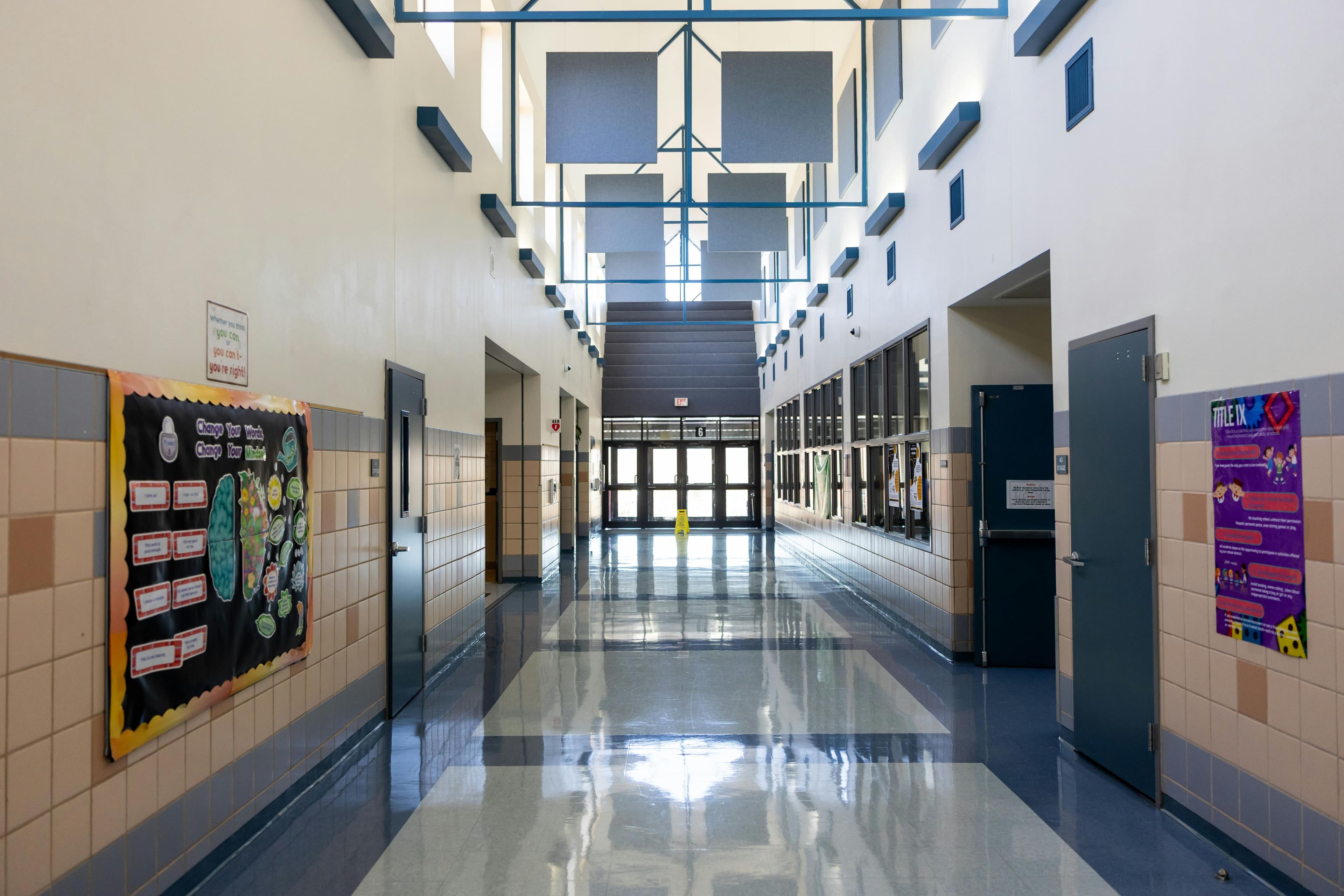
What School Security Systems Actually Prevent Shootings? A 2026 Evidence-Based Guide
Two hundred thirty-nine school shootings. One hundred six children killed. That's the toll from 2018 through 2025, tracked incident by incident by Education Week (Education Week, 2025). Schools have responded by pouring billions into security technology — cameras, access control, AI-powered detection. But which systems actually prevent attacks, and which just create the appearance of safety?
This guide examines every major school security system through the lens of evidence. We'll break down what the data shows about cameras, access control, threat assessment teams, panic buttons, and anonymous reporting — so parents, educators, and administrators can push for the measures that actually protect kids.
TL;DR: The U.S. Secret Service found that behavioral threat assessment teams — now in 97% of K-12 schools — are the most effective tool for preventing school shootings (U.S. Secret Service NTAC, 2025). Physical security like cameras and access control helps during and after incidents, but prevention depends on identifying warning signs before an attack. Parents should ask their schools about BTAM teams, anonymous reporting systems, and staff training — not just hardware.
How Many School Shootings Happen Each Year in the U.S.?
Between 2018 and 2025, the U.S. averaged roughly 30 school shootings per year resulting in injuries or deaths, with 2022 being the deadliest year on record at 51 incidents and 40 fatalities (Education Week, 2025). That year included the Uvalde massacre, where 19 children and 2 teachers were murdered. The sheer frequency of these attacks — roughly one every two weeks during a typical school year — has reshaped how Americans think about school safety.

There's a cautious bright spot. In 2025, schools experienced 18 shootings with injuries or deaths — the fewest since 2020, when pandemic closures kept buildings mostly empty. Seven people died. Forty-four were injured. Whether this decline reflects better security, shifting social dynamics, or statistical noise won't be clear for years. But the trend deserves attention.
What's undeniable is the long-term escalation. Between 1999 and 2004, about 19 students per 100,000 were exposed to school shootings. By 2020-2024, that rate had climbed to 51 per 100,000 — a 168% increase (KFF/Washington Post, 2025). More children face gunfire at school today than at any point in modern history.
So what are schools doing about it? Spending more money than ever. And the question every parent should be asking isn't whether their school has security — it's whether it has the right security.
Which School Security Systems Are Most Widely Adopted?
Nearly every public school in America now controls building access (97%) and requires visitors to sign in (97%), according to the most recent NCES data from 17,400 surveyed schools (NCES, 2023). Security cameras are in 93% of schools — up from 61% just over a decade ago. These three measures are essentially universal.
But adoption drops sharply for other systems. Only 62% of schools have anonymous threat reporting. Staff ID badges are required at 71%. And daily metal detector screening? Just 2%.
The gap between what's adopted and what works is the real story. Nearly every school has a camera. Far fewer have the behavioral threat assessment systems that the Secret Service calls the single most effective prevention measure. Schools have invested heavily in watching — but not as heavily in predicting.
Our finding: The data reveals an uncomfortable mismatch — the most widely adopted security measures (cameras, access control) are reactive tools designed for response and investigation, while the most effective prevention tools (BTAM teams, anonymous reporting) had lower historical adoption rates. Schools spent more on locks and lenses than on the human systems that actually stop attacks before they happen.
Do Security Cameras Actually Prevent School Shootings?
Security camera adoption in schools jumped from 61% in 2009-10 to 93% in 2021-22 — a 32-percentage-point increase in just over a decade (NCES, 2023). Cameras are now the third most common security measure in American schools. But here's the uncomfortable truth: no peer-reviewed study has demonstrated that surveillance cameras deter school shootings.

Cameras do serve real purposes. They help administrators investigate bullying, monitor hallways, and provide evidence after incidents. During an active shooter event, cameras give law enforcement real-time visibility into the threat's location — potentially saving lives during response. That matters. But deterrence? A student planning a shooting already expects to die or be caught. A camera on the ceiling isn't changing that calculus.
The newer generation of AI-powered camera systems claims to change this equation. These platforms use computer vision to detect weapons, identify unauthorized visitors, and flag unusual behavior in real time. Several school districts adopted them in 2024-2025. But independent studies on their accuracy and false-positive rates in school settings are still sparse. Any school considering AI surveillance should demand vendor-verified accuracy data and understand the privacy implications for students and staff.
Cameras aren't useless. They're a response tool, not a prevention tool. Schools that treat surveillance as a complete security solution rather than one layer of a broader strategy are leaving children at risk.
Behavioral Threat Assessment — The Most Effective Prevention Tool
A staggering 97% of K-12 public schools now operate behavioral threat assessment and management (BTAM) teams, up from just 42% in 2016, according to a November 2025 report from the U.S. Secret Service National Threat Assessment Center (U.S. Secret Service NTAC/RAND, 2025). This rapid adoption represents the single biggest shift in school safety strategy in the past decade — and the evidence supports it.

How BTAM Teams Work
BTAM teams are multidisciplinary groups — typically combining administrators, school counselors, psychologists, and sometimes law enforcement. Their job isn't punishment. It's identification and intervention. When a student displays warning signs — social withdrawal, threatening statements, fascination with past attacks, access to weapons — the BTAM team assesses the threat level and connects the student with support.
The Secret Service has studied every targeted school attack since 1974. Their consistent finding: attackers almost always displayed observable warning behaviors beforehand. Classmates noticed. Teachers noticed. But nobody had a structured process for evaluating those signals and acting on them. BTAM fills that gap.
Why It Works Better Than Hardware
Consider the difference. A locked door stops an intruder from walking in. A camera records an attack as it happens. But a BTAM team identifies a troubled student three months before they ever bring a weapon to school — and gets them help. That's prevention versus reaction.
The U.S. Secret Service explicitly recommends threat assessment as the cornerstone of school safety, above physical security measures. Their 2018 report "Enhancing School Safety Using a Threat Assessment Model" established the framework most schools now follow.
Our finding: The jump from 42% to 97% BTAM adoption between 2016 and 2025 represents one of the fastest behavioral policy rollouts in U.S. education history. No physical security technology has ever been adopted this quickly — or with this level of federal backing from the Secret Service.
Does this mean hardware doesn't matter? No. Locked doors bought students time at Sandy Hook. Cameras helped police locate the Uvalde shooter. Physical security and behavioral assessment aren't competing approaches — they're layers of the same system. But if a school had to choose where to invest its next dollar, the evidence overwhelmingly favors BTAM.
What Do Educators and Students Actually Feel About School Safety?
Eighty percent of educators regularly think about their physical safety at work, with 30% thinking about it daily, according to a 2025 national survey by CENTEGIX that polled K-12 staff across the country (CENTEGIX, 2025). Teachers aren't just worrying about test scores. They're scanning exits, planning escape routes, and wondering what they'd do if a shooter walked into their building.
Students feel it too — but differently. Only 56% of students in grades 6-12 say they feel safe during the school day. That number rises to 71% among students who feel their safety concerns are taken seriously by adults at school (YouthTruth/K-12 Dive, 2025-2026). The message is clear: feeling heard matters as much as having a locked front door.
From the field: School safety isn't just about preventing the worst-case scenario. When educators spend mental energy worrying about physical threats, it drains the focus they need for teaching. When students feel unsafe, they can't learn effectively. Security systems should reduce anxiety for everyone in the building — not just address external threats.
What Panic Button Data Reveals
One of the more surprising findings comes from schools that have deployed wearable panic buttons. CENTEGIX analyzed over 265,000 safety incidents from their CrisisAlert system and found that 88% of activations were for behavioral incidents — fights, medical emergencies, mental health crises — not active shooters (CENTEGIX, 2025). Nearly 60% of those incidents happened outside classrooms — in hallways, parking lots, and sports fields.
What does this tell us? School safety technology designed primarily for active shooter scenarios gets used overwhelmingly for everyday crises. The best security systems are the ones flexible enough to handle both a fistfight in the cafeteria and a worst-case armed threat. Schools shopping for safety tech should ask vendors: how does this help my staff on an ordinary Tuesday, not just during a nightmare scenario?
How Much Should Schools Spend on Security Systems?
The U.S. school security market hit $3.1 billion in 2021 and is projected to reach approximately $4.2 billion in 2025, with analysts forecasting growth to $9.2 billion by 2033 — a compound annual growth rate of over 13% (EdWeek Market Brief, 2022; Market Research Future, 2025). Schools are spending more on security than ever before. The question isn't whether to invest — it's where.
Where the Money Goes — And Where It Should
Most school security budgets tilt heavily toward hardware: cameras, access control systems, communication radios, and fencing. These are tangible purchases that administrators can point to. They're visible. They reassure anxious parents at school board meetings.
But the most cost-effective interventions aren't physical at all. Training a BTAM team costs a fraction of a district-wide camera upgrade. Anonymous threat reporting platforms often run less than $5 per student per year. Staff training on recognizing warning behaviors is inexpensive relative to its impact.
The smartest approach isn't choosing between technology and people. It's a layered strategy:
- Foundation: BTAM teams and staff training (prevention)
- Second layer: Access control and visitor management (perimeter)
- Third layer: Communication systems and panic buttons (response)
- Fourth layer: Cameras and AI monitoring (detection and evidence)
Schools with limited budgets should invest from the top down. A well-trained threat assessment team with a basic anonymous reporting app will protect students better than a $500,000 camera system with no one trained to act on what it captures.
What Should Parents Ask Their School About Security?
Most parents have never asked their school a single specific question about security — and that needs to change. Here's a concrete checklist based on what the evidence says matters most. Bring these questions to your next parent-teacher conference, school board meeting, or email to your principal.
The 10 Questions Every Parent Should Ask
- Does the school have a behavioral threat assessment (BTAM) team? If yes, how often does it meet? Who's on it?
- Is there an anonymous threat reporting system? Can students submit tips through an app, hotline, or website?
- How is building access controlled during school hours? Are all exterior doors locked? Is there a single point of entry for visitors?
- What happens when a visitor arrives? Is there a sign-in process? Are IDs checked against databases?
- Do classrooms have lockable doors? Can teachers lock them from inside without stepping into the hallway?
- How does the school communicate during emergencies? Are there panic buttons, two-way radios, or mass notification systems?
- How often are safety drills conducted? Are they varied (not just fire drills)? Do they include lockdown and reunification practice?
- What training do teachers receive on recognizing warning signs? Is it annual? Does it cover both violence and mental health indicators?
- Is there a school resource officer or security professional on site? What's their role — enforcement, mentoring, or both?
- How does the school handle threats posted on social media? Is there a monitoring system? Who reviews flagged content?
Don't accept vague reassurances. Ask for specifics. A school that can't answer these questions clearly hasn't thought through its security strategy — and your child's safety shouldn't depend on hope.
Our finding: Schools with formal, documented answers to all ten of these questions tend to have significantly more coordinated emergency responses than schools relying on ad hoc procedures. Documentation drives accountability.
What's Next for School Security Technology?
The school security market is evolving fast, with AI-powered systems entering the mainstream in 2025-2026. Computer vision platforms claim to detect weapons before shots are fired. Gunshot detection sensors can alert police within seconds. Facial recognition systems can flag unauthorized visitors at entrances. These technologies hold real promise — and real risks.
Privacy concerns are significant. Students deserve to learn without feeling surveilled. AI systems produce false positives that disrupt school operations and create anxiety. And no technology replaces the human judgment of a trained counselor who notices a student in crisis.
The schools that will keep children safest in the coming years won't be the ones with the most expensive technology. They'll be the ones that combine smart tools with well-trained staff, anonymous reporting channels, and a culture where students feel safe enough to speak up when something feels wrong.
That combination — technology plus human connection — is the only school security system that actually works.
Frequently Asked Questions
What is the most effective school security system for preventing shootings?
Behavioral threat assessment and management (BTAM) teams are the most effective prevention tool, according to the U.S. Secret Service. Now operating in 97% of K-12 schools — up from 42% in 2016 — BTAM teams identify at-risk students before violence occurs by monitoring warning signs and intervening early (U.S. Secret Service NTAC, 2025). Unlike physical security, BTAM prevents attacks rather than responding to them.
Do metal detectors prevent school shootings?
Only 2% of U.S. public schools use daily metal detector checks, and research hasn't demonstrated their effectiveness against targeted school violence (NCES, 2023). The U.S. Secret Service notes that most school attackers don't enter through main screening points. Metal detectors also create bottlenecks and a prison-like atmosphere that can harm student wellbeing without proportionate safety gains.
How do anonymous threat reporting systems work in schools?
Anonymous reporting systems let students, staff, and community members report safety concerns — threats, bullying, mental health crises — through apps, hotlines, or web portals without revealing their identity. Currently used by 62% of U.S. schools, up from 36% in 2009-10, these systems have helped avert multiple planned attacks by surfacing warnings students were afraid to report openly (NCES, 2023).
What is a behavioral threat assessment team?
A BTAM team is a multidisciplinary group — typically administrators, counselors, school psychologists, and law enforcement — that identifies, evaluates, and intervenes with individuals who may pose a threat. The U.S. Secret Service's National Threat Assessment Center has championed this approach since 2018, and 97% of K-12 schools now have BTAM teams (Secret Service NTAC, 2025).
How can parents advocate for better school security?
Ask your school the 10 specific questions listed in this guide — covering BTAM teams, anonymous reporting, access control, emergency communication, and staff training. Attend school board meetings armed with data. The most effective advocacy pushes for behavioral prevention and threat assessment, not just visible hardware. Contact your school board with evidence-based recommendations and request a written security plan.
Conclusion
The evidence points to a clear hierarchy of what works:
- Most effective: Behavioral threat assessment teams (BTAM) — prevention through identification and intervention
- Highly valuable: Anonymous threat reporting systems — giving students a safe way to speak up
- Important layer: Access control and visitor management — keeping unauthorized people out
- Supportive role: Cameras, panic buttons, and communication systems — aiding response and evidence collection
- Limited evidence: Metal detectors and AI surveillance — promising but unproven for deterrence
No single system prevents school shootings. But the combination of trained people, structured assessment processes, and smart technology gives schools their best chance at protecting every child who walks through their doors.
If you're a parent, use the 10-question checklist in this guide at your next school meeting. If you're an administrator, audit your security layers from prevention down to response. And if you want to support evidence-based school safety advocacy, [INTERNAL-LINK: get involved with CACF → Crimes Against Children Foundation volunteer and donation page].
Our children deserve schools where they can learn without fear. That starts with the systems we choose to build around them.